

Clearwater Pedestrian Accident Lawyer
Common Causes of Pedestrian Accidents in Clearwater
Driver error accounts for the majority of pedestrian collisions documented across Pinellas County. The most frequent contributing factors include:
- Distracted driving: Phones, navigation systems, and in-vehicle technology routinely cause drivers to overlook pedestrians in crosswalks.
- Impaired driving: Alcohol and drug impairment continue to produce severe pedestrian crashes throughout Pinellas County, particularly during evening and late-night hours.
- Failure to yield: Drivers turning across crosswalks or making right turns on red routinely strike pedestrians who lawfully have the right of way.
- Speeding: Higher impact speeds dramatically increase the likelihood of pedestrian fatality. A pedestrian struck at 40 mph is far more likely to die than one struck at 20 mph.
- Running red lights and stop signs: Drivers who enter intersections against the signal create some of the most violent pedestrian impacts.
- Drowsy driving: Fatigue affects reaction time and judgment in a manner comparable to alcohol impairment.
- Backing up without looking: Parking lot and driveway collisions often involve drivers reversing without checking behind the vehicle.
Types of Pedestrian Accident Cases We Handle
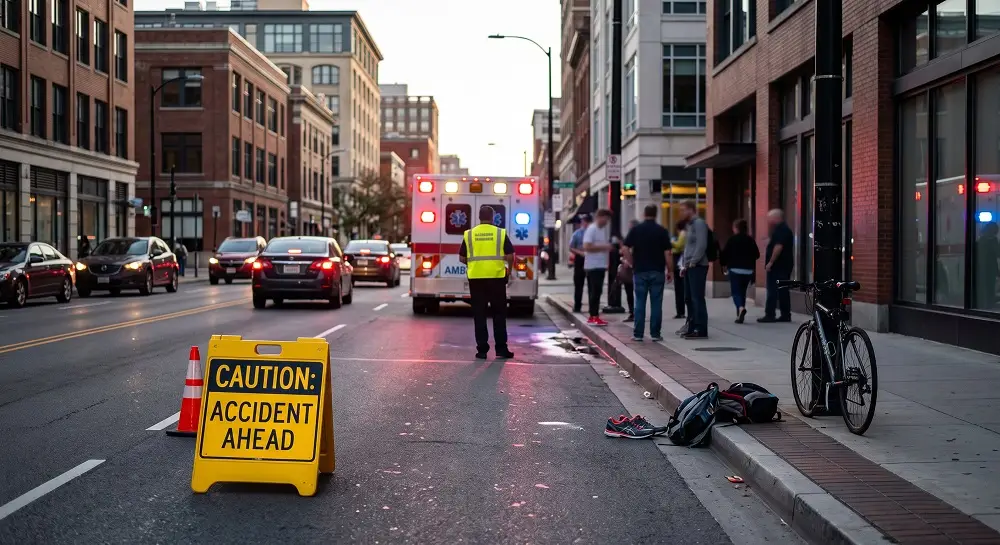
Pedestrian collisions take many forms, and each carries its own evidence and liability questions.
Drivers turning across a crosswalk, running red lights, or misjudging signal timing are the most common cause of pedestrian injuries in Clearwater. Florida law gives pedestrians the right of way at marked crosswalks and signalized intersections.
When a driver flees the scene, victims may still have options through uninsured motorist coverage on their own auto policy or that of a household member. Immediate reporting to law enforcement is critical.
Pedestrians struck in parking lots, shopping centers, and apartment complex driveways may have claims against the driver, the property owner, or both.
Drivers speeding through marked school zones or ignoring crossing guards can be held responsible for the resulting injuries, and the conduct often supports a claim for punitive damages.
Pedestrians lawfully on a sidewalk, shoulder, or pedestrian path may be struck when drivers leave the roadway through distraction, impairment, or loss of vehicle control.
Impaired drivers cause some of the most severe pedestrian crashes in Pinellas County. Florida law allows punitive damages in DUI cases.
Texting, mobile applications, and in-vehicle technology divert a driver's attention from the road. Cell phone records and dashcam footage frequently become key evidence in these claims.
Injuries Frequently Seen in Clearwater Pedestrian Accidents
A pedestrian has no protection against the mass of a passenger vehicle. Injuries from these collisions are routinely catastrophic and often require months or years of treatment.
- Traumatic brain injuries
- Skull fractures
- Spinal cord injuries
- Fractures
- Internal organ damage
- Road rash and degloving injuries
- Amputation
- Facial trauma
- Emotional and psychological harm
- Fatal injuries
At this severity, medical bills alone can reach hundreds of thousands of dollars. Our Clearwater pedestrian accident attorneys build claims that account for every injury, not just the ones that show up first.

Steps to Take After a Pedestrian Accident in Clearwater
The actions taken in the hours and days after a collision shape the strength of any future claim.
Request police and paramedic response. The official crash report becomes important evidence later. Even if injuries feel minor, allow paramedics to evaluate you. Adrenaline masks pain, and concussion and internal bleeding symptoms can take hours to appear.
If you can do so safely, photograph the vehicle, license plate, road conditions, signage, crosswalk markings, debris, and any visible injuries. Witness names and phone numbers are often the strongest evidence available.
Prompt evaluation creates documentation connecting injuries to the collision. Florida's PIP coverage requires a medical evaluation within 14 days of the crash; otherwise, benefits may be reduced or denied.
The driver's insurance company may contact you within hours. Do not provide a recorded statement and do not accept an early settlement offer before speaking with an attorney.
Save medical bills, prescription receipts, repair estimates for damaged property, wage-loss documentation, and any correspondence from insurance carriers.
Pedestrian accident claims involve unique evidence: crosswalk markings, signal timing, surveillance footage from nearby businesses. Surveillance is routinely overwritten within 24 to 72 hours. Early involvement by an experienced Florida personal injury lawyer protects access to that evidence.
Florida Pedestrian Laws That Affect Your Claim
Florida law provides pedestrians with clear protections under § 316.130, but several other statutes can also affect the outcome of a claim.
Pedestrian Right of Way
Florida Statute § 316.130 gives pedestrians the right of way at designated crosswalks, intersections, and stop signs, and requires drivers to yield and exercise due care. Pedestrians crossing outside a designated crosswalk must yield to traffic, though a violation of this rule is a noncriminal infraction and does not automatically bar recovery.
Modified Comparative Negligence
Florida Statute § 768.81 reduces compensation by the percentage of fault assigned to the injured pedestrian and bars recovery entirely once that percentage reaches 51% or higher.
Statute of Limitations
Florida Statute § 95.11, as amended by HB 837 in 2023, sets a two-year deadline to file a personal injury lawsuit for crashes occurring after March 24, 2023. Wrongful death claims carry the same two-year limit.
Government Claims
Florida Statute § 768.28 governs claims involving city, county, or state liability, requiring formal notice before filing and allowing up to three years to bring the claim.
Punitive Damages
Florida Statute § 768.72 allows punitive damages when the at-fault driver acted recklessly or intentionally, a standard often met in DUI-related crashes.
No-Fault Insurance (PIP)
Florida Statute § 627.736 requires a pedestrian's own auto PIP coverage, or a household member's auto policy, to apply first toward medical bills and lost wages. A pedestrian who violated a traffic law (think, jaywalking) at the time of the crash is not automatically barred from recovery, though. Florida's comparative negligence rule allows compensation as long as fault is below 51%, though the recovery is reduced by the assigned percentage.
Compensation Available After a Clearwater Pedestrian Accident
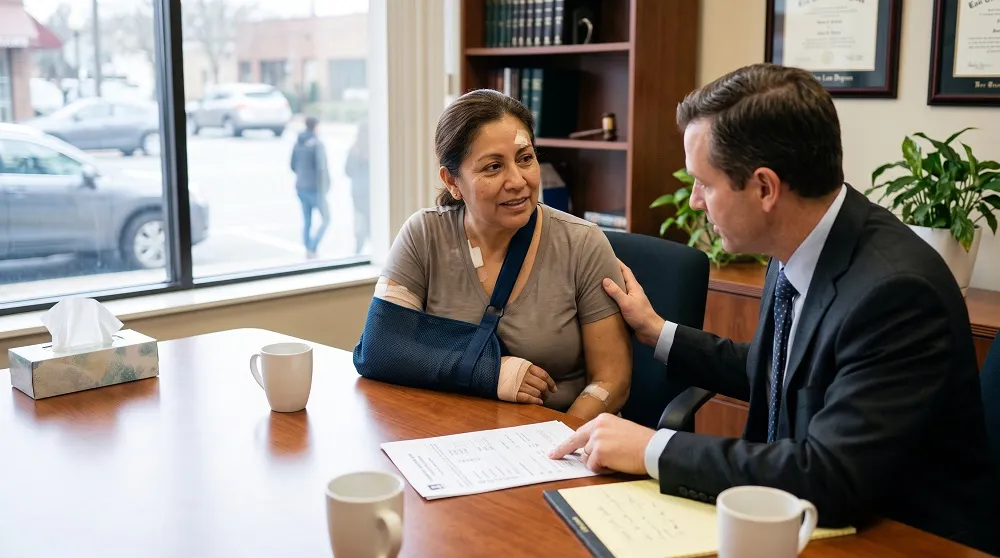
Florida law allows injured pedestrians to recover both economic and non-economic damages. A complete claim accounts for every category of loss, including the future costs of needing ongoing treatment.
These damages cover measurable financial losses, including emergency medical treatment and hospitalization, surgery, rehabilitation, and physical therapy, as well as future medical bills projected by treating physicians. This category also includes prescription medication and assistive devices, lost wages during recovery, reduced earning ability caused by long-term limitations, and wrongful death damages where applicable.
This category addresses the physical and emotional toll of a pedestrian accident, including physical pain and suffering, emotional distress and mental anguish, loss of enjoyment of life, and permanent disability and disfigurement. Punitive damages may also be available in cases involving DUI or reckless conduct.
Every category above needs documentation to hold up, from medical bills to a physician's projection of future care. At Zervos & Calta, we start building that record from day one so nothing gets left out of your claim.
Does Florida's No-Fault Insurance Apply to Pedestrian Accidents?
Yes, through a route many pedestrians do not know about. Florida's no-fault PIP coverage follows the person, not the vehicle. An injured pedestrian who owns a car, or who lives in a household with someone who does, can typically draw on that PIP policy first for:
- 80% of crash-related medical costs (up to $10,000)
- 60% of lost wages during recovery
- Death benefits payable to survivors
A pedestrian who does not have PIP coverage may instead draw on the at-fault driver's policy. When injuries exceed the PIP threshold, which is met by most serious pedestrian injuries, additional compensation can be pursued from the driver's bodily injury liability coverage, uninsured motorist coverage, or umbrella policies.
Why People Across Clearwater Choose Zervos & Calta


Decades of Trial Experience
Angela Zervos and Lauren Calta bring 60+ years of combined litigation experience. Angela holds an AV Preeminent rating from Martindale-Hubbell and has been undefeated at trial for over 20 years. Both partners are members of the Million Dollar and Multi-Million Dollar Advocates Forum.

Your Attorneys, Not Their Assistants
Work directly with Angela Zervos or Lauren Calta throughout your case. No hand-offs to paralegals. No junior associates. Two trial lawyers who personally know your story.

No Upfront Attorney Fees
Our firm handles pedestrian accident claims on a contingency fee basis. You owe nothing unless we recover compensation on your behalf.

Reach Us Anytime
Accidents do not wait for business hours. Neither do we. Call (727) 937-3171 day or night for direct legal guidance.













%20(1)%201.avif)
%20(1)%201.avif)
%20(1)%202.avif)
%201.avif)
%201.avif)
%20(1)%201.avif)
The Attorneys Behind Your Case
 "Insurance companies have teams of lawyers. You deserve an attorney who knows your name and fights just as hard for you."
Angela Zervos
With 20+ years of undefeated litigation experience, Angela delivers aggressive advocacy and genuine care for every client.
 "Our clients aren't case numbers. They're our neighbors who need someone who genuinely cares about their recovery."
Lauren Calta
With 30 years of courtroom experience, Lauren blends fierce representation with compassion and clear communication.




Serving Clearwater and Pinellas County
We represent pedestrian accident victims throughout Clearwater, Largo, Dunedin, Safety Harbor, Palm Harbor, Belleair, Pinellas Park, and surrounding Pinellas County communities.
Clearwater Office

Speak with a Clearwater Pedestrian Accident Lawyer at Zervos & Calta Today
A pedestrian accident can change your life in seconds, and the legal side of your claim begins almost as quickly. The exceptional Clearwater pedestrian accident lawyers at Zervos & Calta, PLLC are ready to investigate the collision, secure the evidence, and pursue full compensation on your behalf. Call (727) 937-3171 or contact us today for your free consultation.
Frequently Asked Questions
Likely yes, though your recovery may be reduced. Florida's comparative negligence rule allows recovery as long as you are less than 51% at fault. Crossing outside a designated crosswalk is a noncriminal infraction, but it does not automatically eliminate the driver's responsibility. Drivers in Florida have an independent duty under § 316.130 to exercise due care toward any pedestrian on the roadway. Insurance adjusters routinely try to assign most of the fault to the pedestrian in these cases. We counter that with evidence.
It may. PIP coverage in Florida follows the person, not just the vehicle. If you live in a household with a relative who carries Florida auto insurance, that policy's PIP coverage typically extends to you when you are injured as a pedestrian. If no household PIP is available, the at-fault driver's bodily injury liability coverage becomes the primary source of recovery for medical bills and lost wages.
You may still have options. Uninsured motorist (UM) coverage on your own auto policy (or a household member's policy) typically applies to hit-and-run pedestrian injuries. Report the crash to law enforcement immediately. Surveillance footage from nearby businesses, witness statements, and physical evidence at the scene help preserve your ability to recover compensation.
Florida law treats child pedestrian cases differently in two important ways. First, children below a certain age are generally not held to the same comparative negligence standard as adults, which limits the insurance carrier's ability to assign fault to the child. Second, the statute of limitations is typically tolled (paused) for minors until they reach the age of majority for certain types of claims. Drivers also owe a heightened duty of care in school zones, near playgrounds, and in residential neighborhoods where children are foreseeable. A parent or legal guardian typically files the claim on the child's behalf.