

Wesley Chapel Personal Injury Lawyers
Types of Personal Injury Cases We Handle in Wesley Chapel

Auto Accidents
Vehicle crashes are a leading cause of serious injury claims in Pasco County. From I-75 pileups near the SR 56 interchange to left-turn wrecks on State Road 54, our Wesley Chapel personal injury attorneys assist clients with cases involving:
- Pedestrian accidents
- Scooter accidents
- Rideshare accidents (Uber/Lyft)
- Delivery vehicle accidents
- Taxi accidents
Losing someone you love to another party's negligence changes everything. Our team pursues comprehensive compensation for funeral costs, lost income, and emotional harm in the following types of wrongful death cases:
- Fatal accidents due to negligence
- Wrongful death lawsuits for car, truck, and motorcycle accidents
- Fatal slip and fall claims
- Nursing home fatalities

Slip/Trip and Fall
Property owners in Wesley Chapel have a duty to keep their premises reasonably safe for visitors. Our personal injury attorneys seek accountability when their failure to fix or warn about known hazards results in:
- Slip and fall injuries
- Trip and fall accidents
- Premises liability cases
- Retail and grocery store incidents
- Apartment and condo falls
When a healthcare provider’s treatment falls below the accepted standard of care, patients pay the price. We work with medical experts to establish liability in cases involving:
- Surgical errors
- Misdiagnosis and delayed diagnosis
- Birth injuries
- Medication errors
- Brain injuries
- Spinal injuries
- Nursing home negligence
Other Personal Injury Cases
We handle a wide range of injury claims that fall outside the previously listed categories. If someone else's carelessness has hurt you or someone you care about, we’re ready to help. Our team regularly accepts cases involving:
- Child injuries
- Burn injuries
- Dog bites and animal attacks
- Boating accidents
- Golf cart accidents
- ATV accidents

Injured? Let Our Aggressive Legal Team Step In.

Focus on healing while we deal with the insurance company and manage the legal process. Start with a free case evaluation to take the first step to protect your right to compensation.
Florida Laws That Impact Personal Injury Claims in Wesley Chapel
Personal injury cases in Florida are guided by specific statutes that govern filing deadlines, fault attribution, and insurance procedures. These rules determine what a claim is worth, how long injury victims have to act, and how insurance companies must respond.
Here are a few of the legal guidelines that may affect your case.
Florida applies a modified comparative negligence standard. This means that an injured party's compensation is reduced by the share of liability assigned to them, and they’re barred from recovering damages entirely if they’re more than 50% at fault. Insurers frequently lean on this rule to shift blame onto the injured party and reduce what they pay out.
Most personal injury lawsuits in Florida must be filed within two years of the original incident. Missing that deadline usually means losing the right to sue for damages, no matter how strong the underlying facts of the case are.
Florida is a no-fault state. As such, drivers must carry personal injury protection coverage of at least $10,000. PIP pays for initial medical bills and lost wages regardless of fault, but you must meet the state’s serious injury threshold before you can pursue a claim for full damages directly against the at-fault driver.
Proving Negligence in a Wesley Chapel Personal Injury Case
To recover compensation in a personal injury claim, you must present clear, compelling evidence. Every claim hinges on proving four legal elements:
- Duty of care: The at-fault party had a legal obligation to act reasonably and prevent harm.
- Breach of duty: The at-fault party failed to uphold their duty of care through negligent or unsafe conduct, such as running a red light or ignoring a wet floor.
- Causation: The at-fault party’s breach directly caused your injury. Your claim must show that the harm wouldn’t have occurred without their actions (or inaction).
- Compensable harm or loss: You suffered measurable losses, including medical expenses, lost wages, emotional distress, or other harm.
Without each of these elements in place, the liable party’s insurer will almost certainly try to deny the claim or shrink the payout.
The skilled Wesley Chapel personal injury lawyers at Zervos & Calta PLLC know how to clearly document each element before we open settlement talks. That way, we can be sure that the claim will hold up under insurer scrutiny and, if needed, before a Pasco County jury.

What Compensation Can You Recover as Part of a Personal Injury Claim?
Personal injury claims are designed to restore the victim’s financial stability and account for the full weight of what happened. Depending on the circumstances, Florida law lets accident victims pursue several categories of damages.
Economic Damages
Economic damages compensate for measurable financial losses connected to the injury. These losses can be supported by invoices, receipts, pay records, and expert evaluations and may include:
- Medical bills: Hospital stays, surgeries, emergency care, and follow-up treatment made necessary by the injury.
- Future medical expenses: Projected costs for ongoing care, physical therapy, or long-term rehabilitation.
- Lost wages: Income the victim loses while recovering and out of work.
- Loss of earning capacity: Reduced ability to earn income in the future because of lasting impairments.
- Property damage: The cost of repairing or replacing vehicles or other personal property damaged in the incident.
A careful build-out of economic damages serves to keep both the claimant’s current and future financial needs on the negotiating table.
Non-Economic Damages
Non-economic damages address the personal and emotional toll of a serious injury. These losses don’t have specific numbers attached, but they carry just as much weight. They include:
- Pain and suffering: Physical discomfort and lasting limitations arising from the injury.
- Emotional distress: Anxiety, depression, trauma, or other forms of acute or chronic psychological harm.
- Loss of enjoyment of life: Loss of the ability to take part in hobbies or daily activities you once enjoyed.
- Permanent disability or disfigurement: Long-term physical changes that affect your appearance or ability to perform various tasks.
- Loss of consortium: Damages awarded to your spouse (and possibly your children) for the loss of your companionship and household services.
These awards acknowledge that recovery is about more than just paying medical bills — they reflect how the injury has changed your life.
Punitive Damages
Florida courts sometimes award punitive damages when a defendant's conduct is deemed grossly negligent or intentional. These damages are less common but may apply in cases involving drunk driving, reckless disregard for safety, or deliberate harm.
What Happens After You File a Personal Injury Claim?
Many clients arrive at our office without a clear picture of what the legal process looks like. Here’s how a Florida personal injury case generally shapes up.
Your first meeting is free and confidential. We’ll review the incident, look through the evidence you already have, and outline how a claim would proceed under Florida law. There’s no cost and no obligation to talk to us.
Once you hire us, we’ll launch a full investigation. That may mean securing the official crash or incident report, tracking down witnesses, preserving surveillance and dashcam footage, collecting medical records, and consulting experts in medicine, engineering, or accident reconstruction when the situation calls for it.
After your condition stabilizes and we’ve fully documented your losses, we’ll send a demand to the at-fault party’s insurance carrier. We’ll negotiate for the full value of your claim and reject lowball offers that leave money on the table. Many cases are resolved at this stage.
If the insurer refuses to offer fair compensation, we’ll file a lawsuit in Pasco County or the appropriate venue. Litigation involves legal processes like discovery, depositions, motion practice, and trial preparation. Because of the risk involved, initiating a lawsuit can force a stubborn insurer to negotiate in good faith.
While most cases resolve via settlement, our attorneys bring nearly 60 years of courtroom experience to the table. If trial is what it takes to win for you, we’re ready.
Meet the Team That Will Handle Your Case from Start to Finish
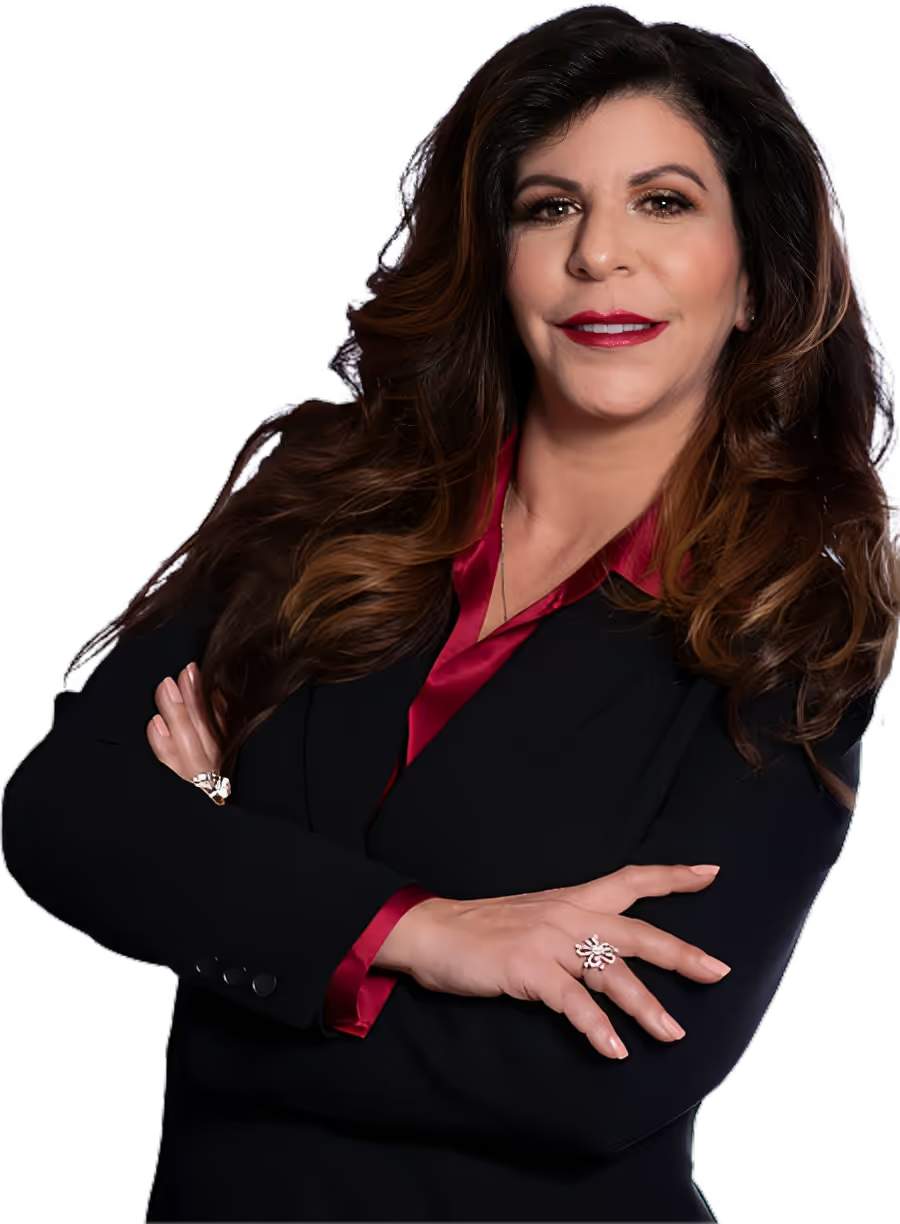 "Insurance companies have teams of lawyers. You deserve an attorney who knows your name and fights just as hard for you."
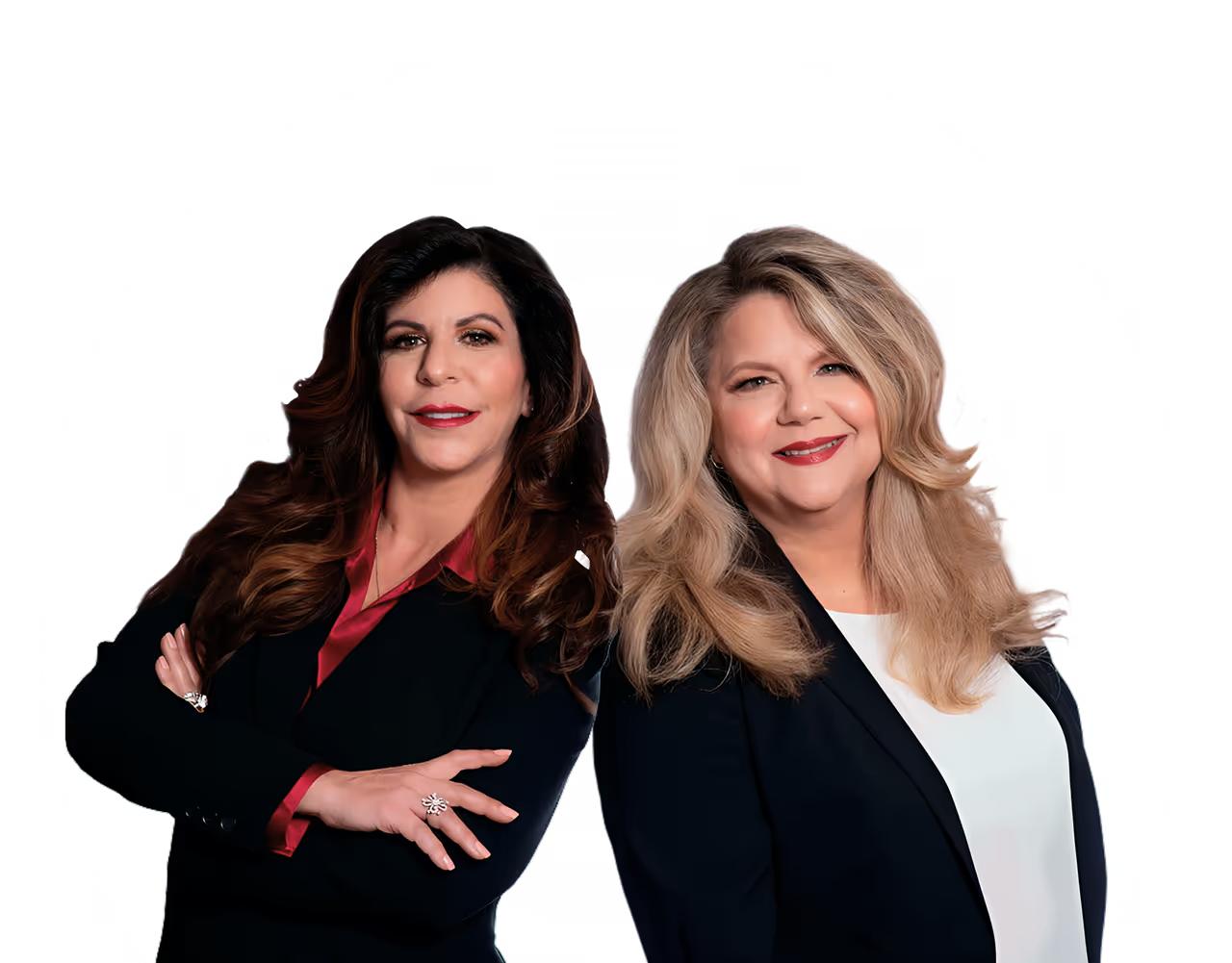
Angela Zervos
With 20+ years of undefeated litigation experience, Angela delivers aggressive advocacy and genuine care for every client.
 "Our clients aren't case numbers. They're our neighbors who need someone who genuinely cares about their recovery."
Lauren Calta
With 30 years of courtroom experience, Lauren blends fierce representation with compassion and clear communication.



What Makes Zervos & Calta PLLC Different?


20-Plus Years Undefeated at Trial
Attorney Angela Zervos has held an undefeated trial record for more than two decades, standing up against major insurance carriers and winning every time.

24/7 Attorney Access
You can call our firm at any hour, day or night, and speak directly with the attorney overseeing your case. You’ll never be handed off to a paralegal or client correspondent.

No Upfront Fees
We work on a contingency basis. That means you’ll pay nothing to get started, and our fee will come out of the final settlement or court award. We only get paid if you do.














%20(1)%201.avif)
%20(1)%201.avif)
%20(1)%202.avif)
%201.avif)
%201.avif)
%20(1)%201.avif)
Serving Injury Victims Across Wesley Chapel and Pasco County
Contact Zervos & Calta PLLC for a Free Consultation
If you’ve been hurt in Wesley Chapel because of someone else's careless or malicious actions, you have a limited time to act to protect your rights.
Our personal injury attorneys offer a free case evaluation, with no obligation to hire us. You’ll speak directly with an experienced attorney, not a junior staff member, and you’ll pay nothing unless we recover compensation for you. Call us today or fill out our online contact form to get started.
Frequently Asked Questions
Get medical attention right away, even if you think your injuries are minor. Call 911 to ensure that a formal report is filed. Photograph the scene, any vehicle or property damage (if applicable), visible hazards, and your injuries. Lastly, get the names and contact information of any witnesses.
When you’re ready, report the accident to your own insurance carrier, but decline to give a recorded statement to the at-fault party's insurer until you speak with an attorney.
Yes, in most cases. Under Florida's modified comparative negligence law, you can receive damages as long as you weren’t more than 50% at fault for the original accident. Your compensation will be reduced by your share of fault.
For example, if you were assigned 20% liability for a $100,000 claim, your eligible recovery would be $80,000. Insurance adjusters often overstate the injured party's share of fault, which is why strong evidence is indispensable.
It depends on the circumstances, your injuries, and how the liable party’s insurer approaches the claim.
Straightforward cases can usually be resolved in a few months. Those involving serious injury, disputed liability, or an insurer that refuses to play ball can take a year or more, especially if a lawsuit becomes necessary. We’ll let you know exactly what to expect during your free consultation.
You may still have coverage through your own uninsured or underinsured motorist (UM/UIM) policy. UM coverage is optional in Florida, but if you carry it, it can pay for medical bills, lost wages, and other losses when the responsible party doesn’t have insurance (or doesn’t have enough to cover the full effects).
Our Wesley Chapel personal injury attorneys will review every available policy to ensure that no source of coverage is overlooked.
Most personal injury cases settle before trial. That said, insurers typically pay more when they know that the injured party’s legal representative is ready and willing to try the case. We prepare every case as if it’s going to trial, with an undefeated trial record spanning decades. If settlement talks fall short, we won’t hesitate to get it done in court.