
Clearwater Wrongful Death Attorney
Fatal Accidents Our Clearwater Wrongful Death Attorneys Handle
Numerous preventable deaths happen throughout Pinellas County every year. When a negligent act or intentional misconduct leads to a lost life, the responsible party must be held accountable. Our Clearwater wrongful death lawyers bring decades of trial experience to every case and know how to prove liability in Pinellas County courts.
- Fatal car accidents: High-speed collisions, intersection crashes, and rear-end impacts kill hundreds of Pinellas County residents each year.
- Commercial truck fatalities: Crashes involving semitrucks frequently cause catastrophic outcomes due to the size and weight difference between vehicles.
- Motorcycle accident deaths: Motorcyclists have no structural protection in a collision, making fatal outcomes disproportionately common, even at moderate speeds.
- Pedestrian fatalities: Drivers who fail to yield or operate their vehicles while distracted put pedestrians on Clearwater’s streets at extreme risk.
- Bicycle crash deaths: Cyclists struck by negligent drivers sustain injuries that often prove fatal, particularly where no bike lane is present.
- Drunk driving fatalities: Impaired drivers carry both criminal and civil liability, and additional damages may also apply in these cases.
- Distracted driving deaths: Phone use and in-vehicle distractions remain a leading cause of fatal crashes throughout Pinellas County.
- Hit-and-run fatalities: When the at-fault driver flees the scene, fair recovery may hinge on careful investigation and uninsured motorist coverage.
- Lethal rideshare accidents: Fatal crashes involving rideshare vehicles raise complex insurance and liability questions, requiring precise legal analysis.
- Surgical error fatalities: Wrong-site procedures and uncontrolled bleeding during surgery can end in death and may constitute medical malpractice under Florida law.
- Misdiagnosis deaths: A missed or delayed diagnosis of cancer, sepsis, or stroke can take a patient's chance of survival down to zero.
- Medication error deaths: Incorrect prescriptions, dosing mistakes, and dangerous drug interactions sometimes cause avoidable deaths in hospital and outpatient settings.
- Anesthesia fatalities: Anesthesia errors during procedures can cause cardiac arrest or brain damage, with liability extending to the anesthesiologist or facility.
- ER negligence deaths: Patients triaged incorrectly or left without timely treatment can deteriorate and die from otherwise treatable conditions.
- Hospital infection deaths: Preventable infections, including sepsis and surgical site infections, can be fatal when staff members fail to follow established safety protocols.
- Nursing home abuse deaths: Neglect, physical abuse, and medication mismanagement in care facilities can claim lives, supporting a wrongful death claim.
- Birth injury deaths: Maternal and infant fatalities resulting from obstetric negligence during labor and delivery may qualify as wrongful death cases.
- Construction accident deaths: Falls from heights, struck-by incidents, and scaffold collapses make construction one of Florida's most dangerous industries.
- Machinery-related fatalities: Workers killed by unguarded equipment or mechanical failures may have wrongful death claims against employers or machine manufacturers.
- Chemical exposure deaths: Fatal toxic exposure in industrial settings can justify claims against employers, property owners, or chemical manufacturers.
- Fatal falls at worksites: Employers and property owners who fail to maintain safe work conditions bear liability when a preventable fall results in death.
- Electrocution deaths: Defective wiring, downed power lines, and OSHA violations that lead to electrocution can involve liability across multiple parties.
- Swimming pool drownings: Property owners who fail to properly secure their pools bear responsibility when inadequate barriers enable fatal drownings.
- Premises liability deaths: Landowners and businesses that ignore known hazards are legally culpable when those conditions lead to a visitor's death.
- Defective product fatalities: Manufacturers of products with design defects or inadequate safety warnings can be held liable when those flaws cause fatal injuries.
- Boating accident deaths: Fatal collisions and capsizings on Clearwater's waterways may involve negligent operation, equipment failures, or missing safety equipment.
What to Do After a Preventable Death in Clearwater
The days after a fatal accident are undoubtedly the most critical for the surviving loved ones’ ensuing legal claim. Evidence disappears, witnesses become harder to reach, and insurance carriers begin building their defense before the full picture comes into focus.
For this reason, taking the right steps early on can protect your right to full compensation under Florida’s wrongful death statutes. Here’s what to do.
Secure legal representation before speaking with the insurance company. Any statements you make without a lawyer’s guidance can be used to limit your recovery. Your attorney will begin protecting your rights from the first call.
Save any photos, videos, communications, or documents related to the incident. Don’t dispose of the deceased's personal property or any vehicles or equipment involved in the accident until your attorney has had a chance to review it.
Official reports from law enforcement or relevant agencies form the foundation of a strong wrongful death claim. Get copies as early as possible and share them with your attorney.
Lost income and support calculations require clear documentation of earnings, benefits, and employment history. Collect pay stubs, tax returns, benefit statements, and anything else related to your loved one’s financial contributions.
Keep records of funeral expenses, burial costs, grief counseling bills, and any other costs your family has incurred as a result of the death. They’ll all factor into the compensation you’re eligible to receive.
Write down the names and contact information of anyone who witnessed the accident or has relevant knowledge of it. Witness accounts usually become harder to obtain as time passes, so it’s important to do this promptly.
Florida's two-year statute of limitations for wrongful death claims begins on the date of death. Families who act without delay give their attorneys the best opportunity to build a compelling case before the legal deadline forecloses any chance of recovery.
What Florida’s Wrongful Death Law Covers
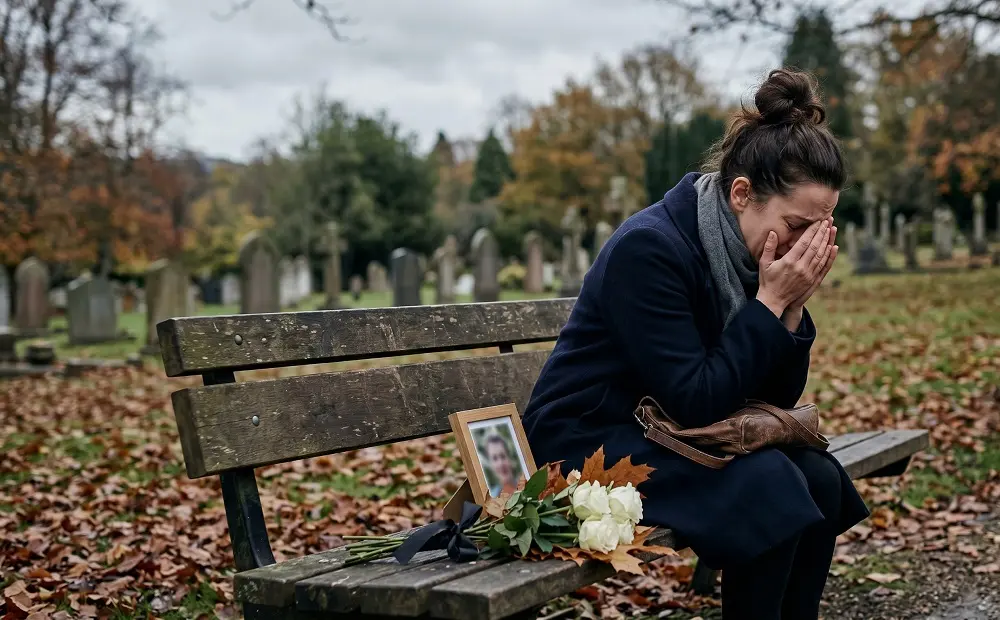
Under Florida Statute 768.19, a wrongful death occurs when someone dies because of another party's wrongful act, negligence, default, or breach of contract. If the deceased would have had a valid personal injury claim had they survived, the case meets the standard for a wrongful death lawsuit under Florida law.
Who Can File a Wrongful Death Lawsuit in Florida?
In Florida, a court-appointed personal representative must bring a wrongful death claim on behalf of surviving family members. The personal representative acts for all beneficiaries, not just themselves.
Beneficiaries who may seek damages for a wrongful death include:
- The surviving spouse: Entitled to compensation for lost financial support, lost companionship, lost consortium, and mental pain and suffering.
- Minor children: Can receive damages for lost parental guidance, lost financial support through adulthood, and psychological trauma connected to the loss.
- Adult children: Can pursue mental pain and suffering damages if there is no surviving spouse or minor children.
- The parents of the deceased: Entitled to damages for grief, lost companionship, and counseling costs when the deceased left no spouse or children.
- Blood relatives and adoptive siblings: May be eligible for compensation if they were financially dependent on the deceased at the time of death.
Our legal team handles the appointment of the personal representative as part of our services, so your family doesn’t need to manage that process alone.
How a Wrongful Death Lawsuit Differs from Criminal Charges
A wrongful death lawsuit is a civil action, not a criminal charge. Civil and criminal cases operate under different legal standards. A criminal prosecution requires proof beyond a reasonable doubt, while a wrongful death claim requires only a preponderance of evidence, meaning it’s more likely than not that the defendant's conduct caused the death.
That said, a negligent party can face both criminal charges and a civil wrongful death action at the same time. Our Clearwater wrongful death attorneys tenaciously pursue civil claims regardless of whether criminal proceedings are pending.
How Damages Are Calculated in a Wrongful Death Lawsuit
Wrongful death lawsuits seek full financial recovery for survivors whose lives have been permanently changed. Florida law distinguishes between damages recovered on behalf of the deceased's estate and those the surviving family members recover directly.
Comprehensive compensation addresses losses across both categories and may include:
- Estate claims: Medical expenses before death, funeral and burial costs, lost earnings the deceased would have contributed, and lost lifetime financial accumulations.
- Loss of financial support: The income and benefits surviving family members depended on, calculated through the deceased’s expected remaining working years.
- Loss of companionship and guidance: Non-economic damages for the relational toll, including parental guidance for minor children and consortium for the surviving spouse.
- Mental pain and suffering: Emotional distress damages for each eligible survivor, including grief counseling costs.
- Punitive damages: Available when the responsible party acted with gross negligence or intentional misconduct.
Compensation varies based on the deceased's age, income, career stage, and family structure, as well as the facts of the death. Cases involving working parents with minor children regularly reach seven figures.
It’s common for liable parties to open with inadequate offers, counting on the survivors accepting before they understand the full value of their claim. We document every loss meticulously and counter those lowball positions with verified economic data and expert testimony.
Tactics Insurance Companies Employ Against Grieving Families

Liability insurers use calculated strategies to minimize wrongful death settlements. Survivors who are aware of these tactics are harder to take advantage of.
Standard approaches include:
- Quick lowball offers: Offering an inadequate settlement within days or weeks, before the family understands what their claim is really worth.
- Blaming the deceased: Investigating the victim's history, driving record, or health to argue that they contributed to their own death.
- Challenging family relationships: Hiring private investigators to document family conflicts and assert that companionship-related losses are overstated.
- Slashing income projections: Working with economists to minimize the deceased's future earning capacity and reduce lost-support calculations.
- Concealing available coverage: Withholding information about umbrella policies and insurance layers that may significantly increase what the family can recover.
- Delaying processing: Dragging the claims process out for months or years to financially exhaust the survivors into accepting an insufficient amount.
- Disputing causation: Claiming that the death resulted from a pre-existing condition or natural causes rather than the negligent act.
Our capable attorneys know how to counter these tactics using independent investigations, expert witness testimony, aggressive settlement negotiations, and painstaking trial preparation.
What Sets Our Clearwater Wrongful Death Practice Apart

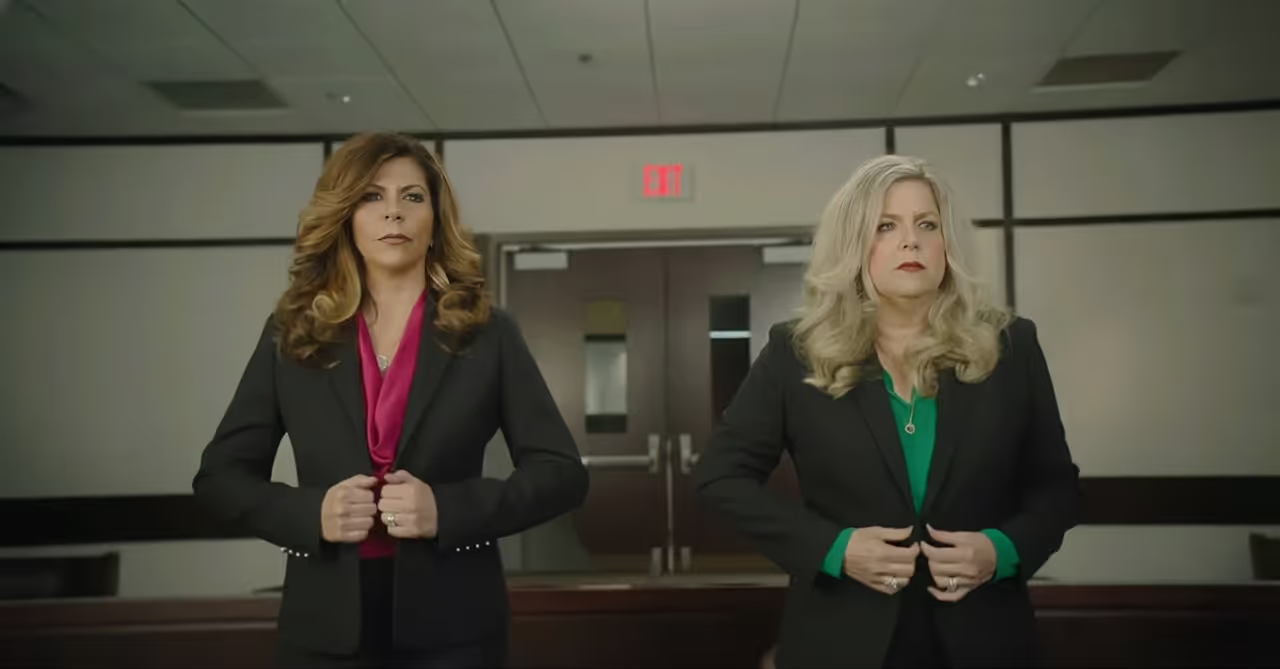
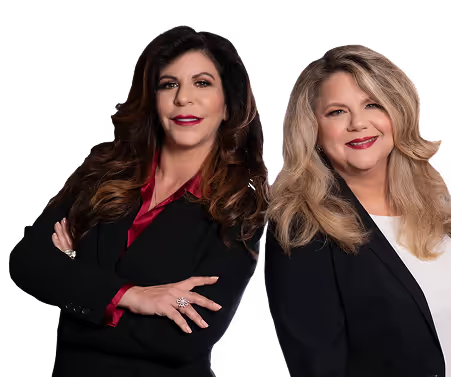
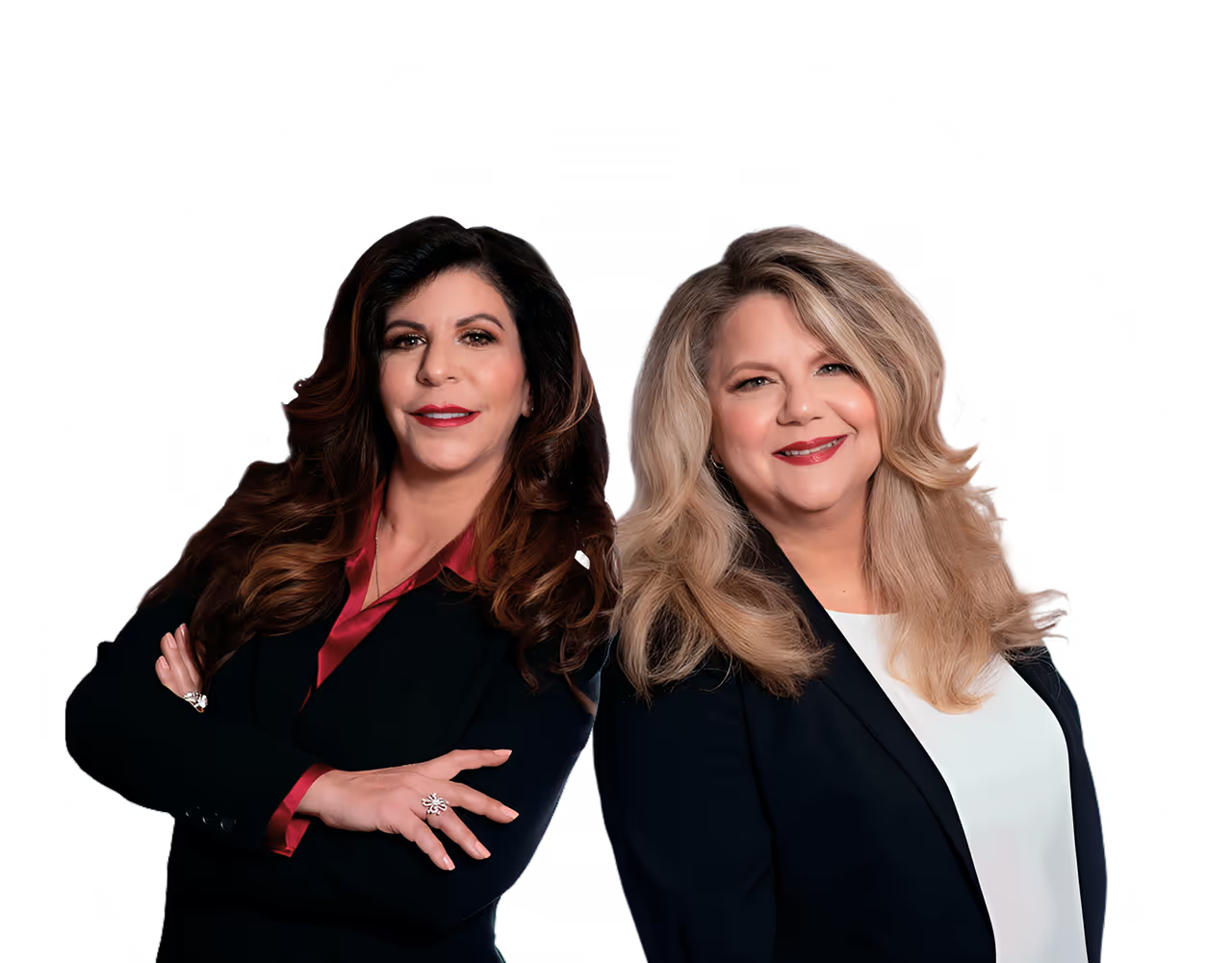
At Zervos & Calta, PLLC, cases are never assigned to a paralegal or handed off to a junior associate. Attorneys Angela Zervos and Lauren Calta handle cases directly, from the initial consultation through the final settlement or verdict.

A Trial Record That Influences Settlement Negotiations
Angela Zervos has gone over 20 years without a trial loss. The insurers that handle wrongful death claims in Pinellas County are well aware of this record, and it greatly impacts what they’re willing to offer.
.svg)
Attorney Access Every Step of the Way
From your first call, you’ll communicate directly with your attorney. They’ll always be there to address your questions and concerns — no case managers, no relaying messages through staff.

60-Plus Years of Combined Litigation Experience
Angela and Lauren bring more than six decades of collective trial success to the table. Both are members of the Million Dollar and Multi-Million Dollar Advocates Forum.








%20(1)%201.avif)
%20(1)%201.avif)
%20(1)%202.avif)
%201.avif)
%201.avif)
%20(1)%201.avif)
The Attorneys Who Will Fight for Your Family
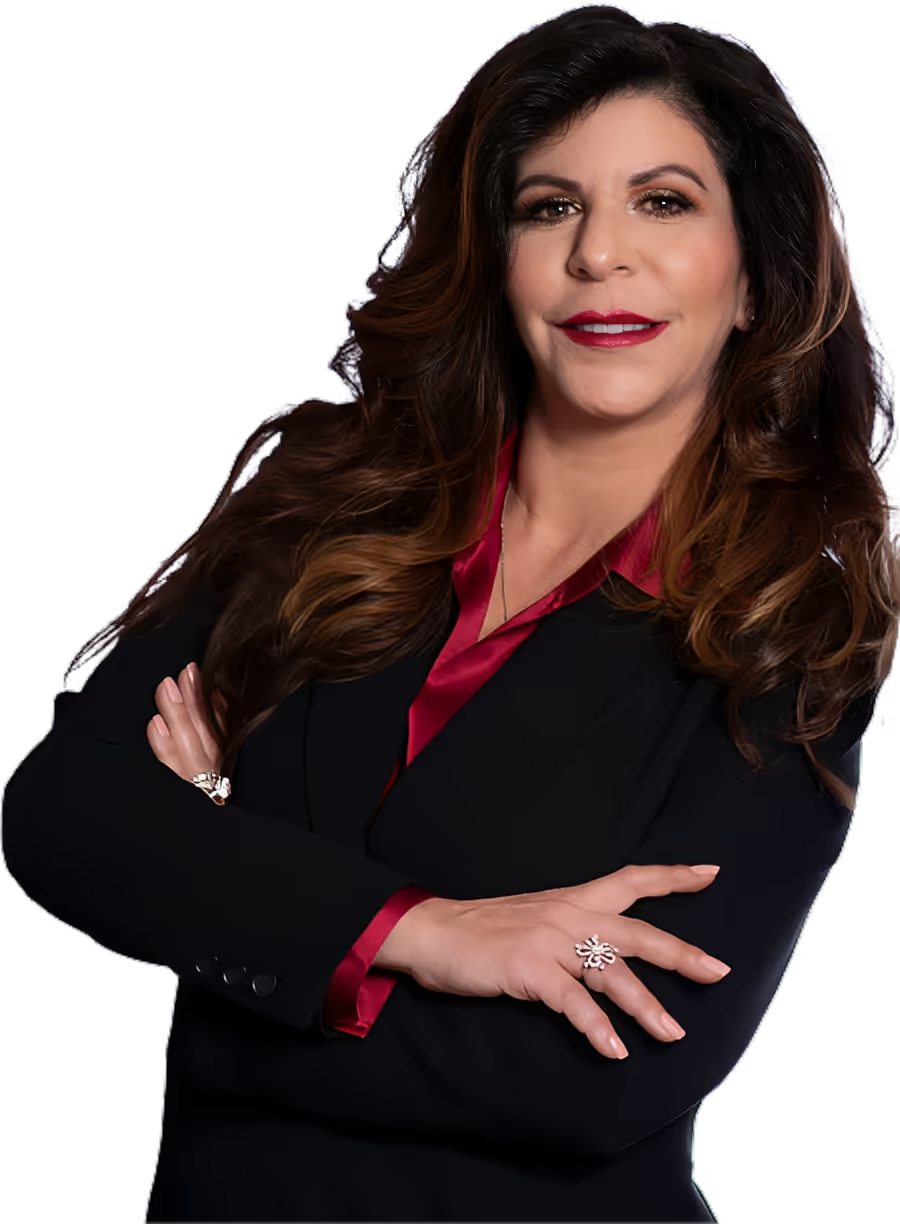 "Insurance companies have teams of lawyers. You deserve an attorney who knows your name and fights just as hard for you."
Angela Zervos
With 20+ years of undefeated litigation experience, Angela delivers aggressive advocacy and genuine care for every client.
 "Our clients aren't case numbers. They're our neighbors who need someone who genuinely cares about their recovery."
Lauren Calta
With 30 years of courtroom experience, Lauren blends fierce representation with compassion and clear communication.



Serving Clients in Clearwater and Throughout Pinellas County
Our Clearwater office is available by appointment, and our Tarpon Springs office handles cases throughout Pinellas County. Surviving loved ones throughout Clearwater, Clearwater Beach, Safety Harbor, Dunedin, and the surrounding area are encouraged to reach out to us directly.
Negligent Actors Must Answer for What They’ve Done
Contact our Clearwater wrongful death attorneys today for a free case evaluation. We’ll get to work investigating your claim immediately, before crucial evidence disappears and Florida's two-year filing deadline expires.
FAQ About Wrongful Death Claims in Clearwater
A wrongful death action is a civil claim with a lower burden of proof than a criminal case. Both can proceed simultaneously. An acquittal in criminal court doesn’t bar a civil wrongful death lawsuit, and a conviction can support it.
Yes. Florida's modified comparative negligence rule reduces the eligible damages by the deceased's percentage of fault. If their percentage of liability exceeds 50%, the surviving family members can’t recover compensation. This is why insurers tend to scrutinize the victim's conduct after a fatal accident.
Multiple sources of compensation may still be available, including the defendant's personal assets, undisclosed umbrella policies, the deceased’s personal policy, or uninsured motorist coverage in fatal hit-and-run cases. A knowledgeable attorney can identify all potential avenues.
In Florida, workers' compensation covers many workplace deaths but doesn’t preclude a wrongful death claim against a negligent third party, such as a contractor, equipment manufacturer, or property owner. Both claims can proceed at the same time.
Yes. A wrongful death claim compensates the surviving family members for their own losses, while a survival action seeks to recover the costs the deceased incurred before death, such as pain and suffering and medical expenses. Florida law permits both types of legal actions.